Kelley's Sewage Cleanup
Stanhope, IA · 50246 Basements · Bathrooms · Crawl Spaces · Businesses

Toilet Overflow Cleanup in Stanhope, IA Near Me

A toilet overflow with waste in it is a sewage spill. A local crew cleans the floor, checks below and disinfects.

Sewage Backup Cleanup
Local Cleanup Crews
Category 3 Procedures
Homes and Businesses

Not every toilet overflow is equal. Clean water from the tank running over the rim is one thing. A bowl full of waste spilling across the floor is a sewage spill, and if it soaked into the subfloor or dripped through the ceiling below, it is more than a towel job. For toilet overflow cleanup in Stanhope, IA, we connect you with a local crew that cleans it properly.

Stop the water first

Turn the shutoff valve behind the toilet clockwise until it stops. If you can't reach it, lift the tank lid and raise the float to stop the fill. Don't flush again to see if it clears. If more than one fixture is backing up, stop using all water in the house, because that points to the main line rather than a single clog.

When a small spill is a big job

A spill that stays on a tile floor and gets cleaned up quickly may be manageable. It becomes a professional job when:

  • Water ran under vinyl flooring or into the subfloor
  • It reached carpet in an adjoining room
  • Water dripped through the ceiling of the room below
  • The toilet overflowed repeatedly before anyone noticed
  • The bathroom smells days later

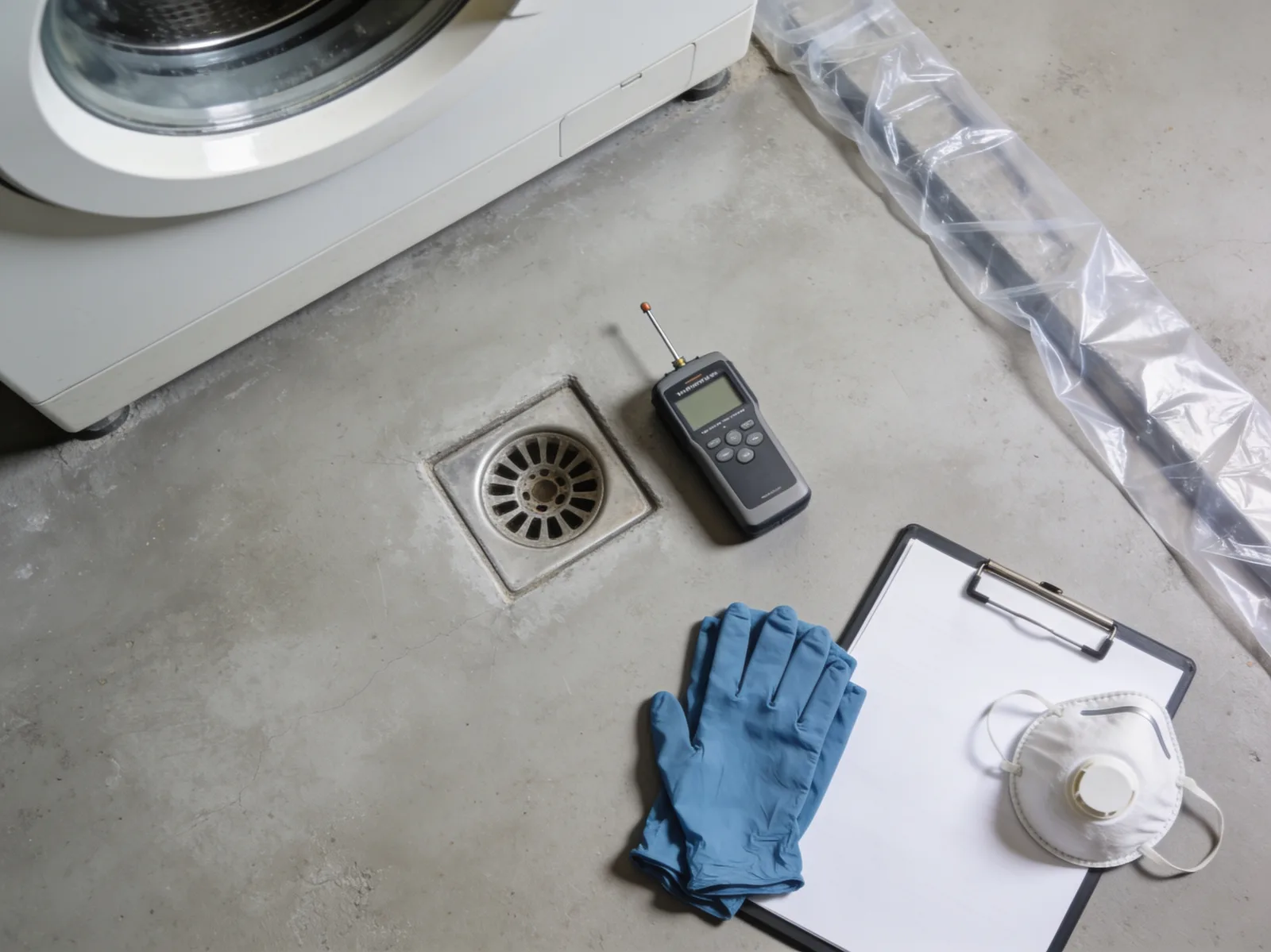
Water that gets around the toilet base and wax ring can sit in the subfloor where you can't see it. A crew uses a moisture meter to check, and may pull the toilet to look.

What the crew does

The crew removes waste and standing water, pulls wet bath mats and rugs, and checks floor and walls for moisture. Wet baseboards and the lower edge of drywall may come out. All hard surfaces, tile, grout, the toilet itself and fixtures, are scrubbed and treated with disinfectant. If the ceiling below got wet, that section often needs removal; see drywall removal. Drying equipment may stay for a couple of days.

Category matters

Restoration crews treat toilet water with waste in it as Category 3, the most contaminated class, which changes what can be saved. Our page on Category 3 water explains that in plain terms. If the overflow came from a backed-up main rather than a clog, the bigger cleanup is under sewage backup cleanup.

The clog or the line

A single clog is a plunger or plumber issue. A toilet that overflows while other drains gurgle suggests a main line problem that may need a plumber with a camera. The cleanup crew can tell you what they observed.

Keep kids and pets out of the bathroom until it is cleaned. Call (217) 404-1483 to reach a crew for toilet overflow cleanup in Stanhope, IA.
How cleanup works

Four steps to a clean, dry space in Stanhope, IA

01

Stop the water

Shut off every fixture, keep kids and pets out, and take photos from a dry spot. Then call and tell us where the sewage is.

02

Get matched with a crew

We connect you with a local sewage cleanup crew covering Stanhope, IA and you go over the scope, timing and price with them.

03

Extract and remove

The crew pumps out the sewage, bags solids and cuts out carpet, pad and drywall that soaked it up.

04

Disinfect and dry

Hard surfaces get cleaned and disinfected, then air movers and dehumidifiers run until moisture readings show dry.

Coverage

Sewage Cleanup Across Stanhope, IA

Sewage backup cleanup across the neighborhoods and ZIP codes around Stanhope, IA.

ZIP codes we serve

50246
Toilet Overflow Cleanup in Stanhope, IA

Sewage cleanup FAQs

Frequently asked questions about sewage cleanup

Questions we hear most about Toilet Overflow Cleanup in Stanhope, IA.

Talk to a real person
How much does sewage cleanup cost in Stanhope, IA?
<p>There isn't a single number, because the price is built from the job itself. The big drivers are the square footage affected, how deep the water got, how long it sat, and how much material has to be torn out and hauled away. Finished basements with carpet and drywall cost more than bare concrete. Drying days, containment and disinfection add to it. A crew can only price it after seeing the space and taking moisture readings, so ask them to walk you through each part of the <a href="/services/sewage-damage-cleanup">damage cleanup</a> scope.</p>
Does homeowners insurance cover sewage backup?
<p>Often not by default. Many standard homeowner policies exclude water that backs up through drains or sewers unless a sewer backup or water backup endorsement was added. Check your declarations page or call your agent. If you do have coverage, document everything before cleanup starts: photos, video, a list of damaged items, and the date and weather. Keep damaged items until the adjuster says otherwise, and ask the cleanup crew for moisture logs and a written scope. That paperwork helps either way.</p>
Can carpet be saved after a sewage backup?
<p>Generally no. Under the industry standard for water damage, carpet and pad that touched sewage are treated as unsalvageable and removed. Sewage is classed as <a href="/services/category-3-water-cleanup">Category 3 water</a>, the most contaminated type, and the pad acts like a sponge that can't be reliably disinfected. Area rugs are sometimes sent out for specialty cleaning, but most crews and adjusters treat wall-to-wall carpet and pad as a loss. Tile, concrete and sealed floors can usually be cleaned and disinfected in place.</p>
What is the difference between a sewer backup and a septic backup?
<p>A sewer backup happens on homes connected to a public sewer, when the lateral or the city main can't carry the flow. A septic backup happens on homes with their own tank and drain field, when the tank is full or the field stops absorbing. Inside the house, the cleanup is similar. The fix is different: a plumber or the sewer utility for a sewer line, a septic contractor for the tank. See <a href="/services/septic-backup-cleanup">septic backup cleanup</a> for how those two jobs fit together.</p>
Will a sewage backup cause mold?
<p>It can, if materials stay wet. Mold needs moisture and something to feed on, and wet drywall paper, wood and carpet backing provide both. The risk climbs the longer the structure stays damp, which is why cleanup includes several days of drying with air movers and dehumidifiers and readings to confirm materials are dry. Closing up walls over wet studs is a common way mold problems start. Getting the water out quickly and drying properly is the main defense.</p>

Book sewage cleanup

Sewage Backup in Stanhope, IA? Call now.

Tell us where the sewage is and we connect you with a cleanup crew covering Stanhope, IA. Scope, timing and price are gone over on the call. (217) 404-1483.

Call (217) 404-1483 Services